
How to Clean a Titanium Cutting Board: A Food-Safe Routine
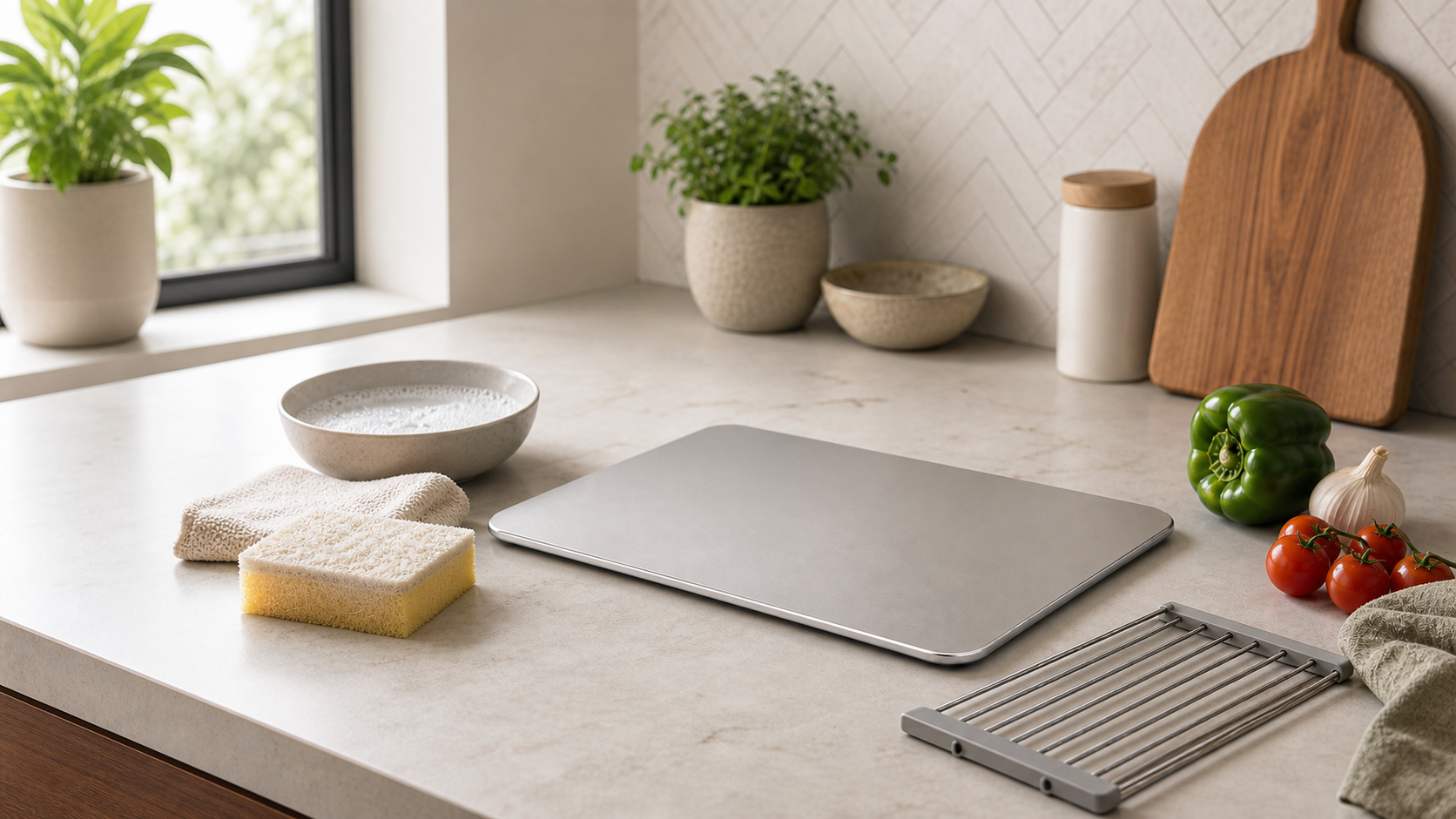
Knowing how to clean a titanium cutting board is less about a complicated ritual and more about consistent food-safety habits. Wash promptly, remove food residue, use products suitable for food-contact surfaces, dry completely, and prevent raw foods from contaminating ready-to-eat ingredients.
The everyday cleaning method
1. Remove food and rinse promptly
Scrape loose food into the bin or compost. Rinse the board so residue does not dry onto the surface. Avoid using a knife edge as a scraper because that can damage the knife and may mark the board.
2. Wash with warm water and dish soap
Use a soft sponge or cloth with ordinary dishwashing liquid. Clean the full surface, edges, and any handle or hanging opening. Pay attention to areas where food can collect.
The USDA distinguishes cleaning from sanitizing: cleaning removes dirt and residue, while sanitizing reduces microorganisms after the surface has been cleaned. You cannot reliably sanitize food residue, so washing comes first.
3. Rinse away soap
Rinse with clean water until no slippery film or visible residue remains. If the board has a textured finish, check it under good light.
4. Dry completely
Dry with a clean towel or place the board upright in a rack with airflow on both sides. Do not stack it wet beneath cookware. A dry storage area helps keep the entire prep station cleaner.
When should a cutting board be sanitized?
Sanitizing can be appropriate after preparing raw meat, poultry, seafood, or eggs, or when someone in the household is at higher risk from foodborne illness. Use only a sanitizer labeled for food-contact surfaces and follow its dilution, contact-time, rinsing, and ventilation instructions exactly.
Do not mix cleaning chemicals. Never combine chlorine products with ammonia, acids, vinegar, or other cleaners. If Avinoti’s product instructions differ from a cleaner label, pause and confirm the safe method before use.
Prevent cross-contamination
Cleaning technique is only one part of cutting-board safety. The USDA recommends keeping raw meat, poultry, seafood, and eggs separate from foods that will be eaten without further cooking.
A practical home system is:
- one board or one clearly defined workflow for raw animal products;
- another clean board for produce, bread, fruit, and ready-to-eat foods;
- clean hands, knives, counters, and handles after raw-food preparation;
- a fresh towel or clean drying rack rather than a used dishcloth.
If you own one board, prepare ready-to-eat foods first. Then wash the board and tools before switching tasks, and clean and sanitize as appropriate after raw foods.
Can a titanium cutting board go in the dishwasher?
Dishwasher compatibility depends on the complete product, not just the word “titanium.” Handles, bonded layers, surface finishes, and printed or attached components can change care requirements. Check the Avinoti care instructions for your exact model. If dishwasher use is not explicitly supported, hand washing is the conservative option.
You can review the current AVINOTI titanium cutting board product page for model-specific information.
What not to use
Avoid harsh abrasives, steel wool, and scraping tools unless the manufacturer specifically approves them. They may change the finish or create visible scratches. Skip unverified internet mixtures that combine acids, oxidizers, or other household chemicals. “Natural” does not automatically mean food-contact safe or material compatible.
Do not use the board as a hot pad unless the product documentation explicitly permits it. Also avoid cutting directly through bones or using cleavers in ways that could deform a thin board or damage a blade.
How to deal with odor or discoloration
Titanium itself does not absorb food in the same way as unfinished wood, but residue can remain on any inadequately cleaned surface. Rewash the board with dish soap, including the edges and underside, then rinse and dry. If discoloration persists, consult the product instructions before applying an abrasive or chemical treatment.
Persistent odor can also come from the sponge, towel, drain, or storage rack. Clean those items and make sure the board is not stored while damp.
How often should you inspect the board?
Give the surface a quick check after every wash. Look for:
- sharp or bent edges;
- deep damage that traps residue;
- separation in any attached part;
- a loose handle or hanging component;
- changes that make the board unstable on the counter.
Minor cosmetic marks are different from damage that affects safe use. If the board no longer sits securely or cannot be cleaned effectively, stop using it and contact the seller.
For a broader material comparison, read titanium cutting board pros and cons.
A five-minute post-cooking routine
- Move leftovers into clean containers.
- Scrape and rinse the board.
- Wash the board, knife, and nearby food-contact surfaces with dish soap.
- Sanitize after raw animal products when appropriate, following the product label.
- Rinse if directed, then dry the board upright.
- Replace or wash the sponge and towel if they contacted raw-food residue.
This sequence is simple enough to repeat, which matters more than occasional intensive cleaning.
Frequently asked questions
Do I need to sanitize the board after cutting vegetables?
Routine washing is generally appropriate for ordinary produce preparation. Sanitize when the board has contacted raw animal products, when contamination is suspected, or when public-health or clinician guidance calls for extra precautions.
Can I clean titanium with vinegar?
Do not assume a homemade cleaner is suitable for the product or for food-contact sanitation. Dish soap and water are the dependable daily method. For sanitizing, use an appropriately labeled product and follow both its instructions and the board manufacturer’s guidance.
Will a titanium cutting board dull knives?
Cutting-surface feel and knife wear depend on the surface, knife steel, angle, and technique. Use controlled slicing rather than striking the board, keep knives properly maintained, and follow the product’s intended use.
How should I store the board?
Store it clean and completely dry in a rack or location with airflow. Keep it stable and away from areas where dirty water or raw-food drips can reach it.
The bottom line
The safest way to clean a titanium cutting board is straightforward: wash promptly with dish soap and water, rinse well, dry fully, and manage raw foods separately. Use chemical sanitizers only as labeled, and follow the care instructions for the exact Avinoti board rather than relying on broad claims about titanium.