
Milk Pan vs Stock Pot vs Wok: Which Shape Fits the Job?
The most useful cookware comparison starts with shape. A milk pan, stock pot, frying pan, and wok can all heat food, but their depth, opening, handle arrangement, and available sizes make different tasks easier.
AVINOTI currently lists titanium versions of all four shapes. Rather than treating one as the universal choice, match the vessel to the amount of food, the movement the recipe requires, and the way you lift, pour, and clean it.
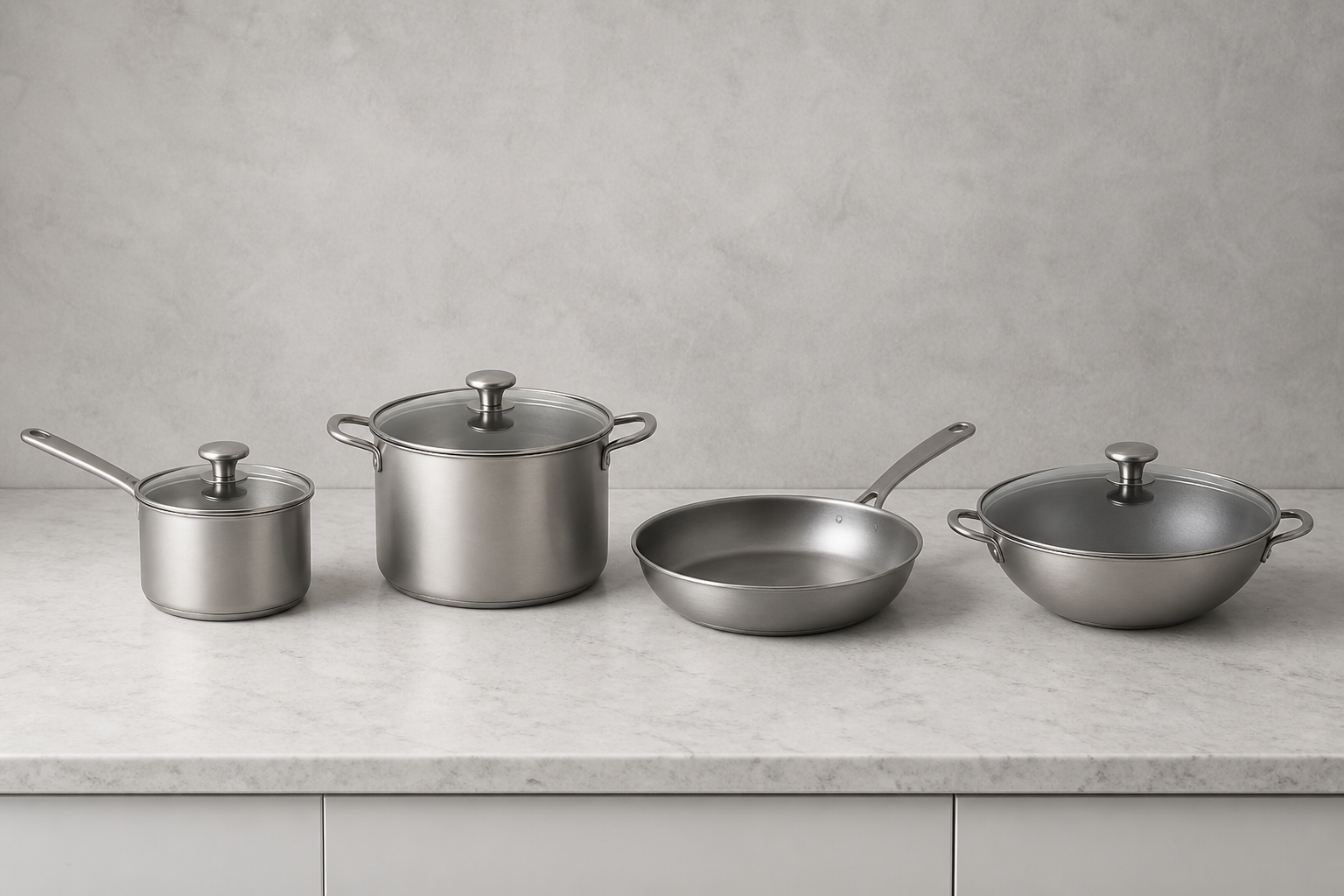
Quick comparison
| Cookware shape | Best starting point for | Feature to verify |
|---|---|---|
| Milk pan | Small portions, milk, oatmeal, sauces | Diameter, handle style, lid |
| Stock pot | Soups, noodles, stews, larger batches | Size, depth, two-hand lifting |
| Frying pan | Browning, eggs, shallow cooking | Cooking surface, side height, handle |
| Wok | Stirring and tossing over a broad heat zone | Curved profile, lid, handle balance |
This table describes the practical role of each shape. It does not claim that every recipe or cooktop will produce the same result. Check the exact product specifications and your cooktop requirements.
Choose a milk pan for smaller, contained tasks
A milk pan is a compact pot with a long handle. The shape is useful when you want to stir a small amount and pour without lifting a large two-hand vessel.
The AVINOTI titanium milk pan is listed in 16 cm and 18 cm sizes, with standard steel-handle and wooden-handle options. Its product description positions it for milk, oatmeal, sauces, baby food, and small meals.
Before choosing, check whether the handle material and lid suit your normal stove-to-table workflow. A longer handle can help with controlled pouring, but it also needs clear space on the cooktop.
Choose a stock pot for volume and depth
A stock pot prioritizes depth and batch size. It is the natural comparison point for soups, noodles, stews, and boiling when a small saucepan would be crowded.
The AVINOTI titanium stock pot is offered in 22 cm and 26 cm sizes and includes a lid. Diameter alone does not tell you total capacity, so confirm the current specification sheet if exact volume matters.
Think about the filled weight, not only the empty cookware. A larger pot full of liquid may need two-hand lifting and a clear path between the cooktop and sink.
Choose a frying pan for surface access
A frying pan gives you a broad, relatively open cooking surface. That makes it easier to turn, slide, and inspect food. It is a practical choice for eggs, pancakes, browning, and other shallow preparations.
When comparing frying pans, check the usable cooking diameter, side-wall height, lid availability, and handle construction. Product naming such as “nonstick” should be verified against the exact surface description and care instructions; do not assume that all titanium cookware has the same coating or utensil rules.
Choose a wok for active movement
A wok's profile supports stirring and moving ingredients through different parts of the vessel. The shape can be useful for stir-frying and other recipes that involve frequent tossing or folding.
Check whether the base is compatible with your cooktop and whether the included lid and handles fit the way you cook. A wok is not automatically a substitute for a stock pot: the broad upper area and curved profile create a different working space.
Size first, material second
Material matters, but shape and size determine whether the vessel fits the job. Use these questions in order:
- How many portions do you normally prepare?
- Is the recipe mostly liquid, shallow cooking, or active stirring?
- Do you need to pour from one long handle or lift with two hands?
- Do you need a lid?
- What base shape and diameter does your cooktop support?
- What cleaning and utensil rules apply to the exact surface?
For a small breakfast or sauce, a 16–18 cm milk pan may be the most direct tool. For a family soup, the deeper 22–26 cm stock-pot format is easier to justify. For browning, start with the frying pan. For recipes built around constant movement, compare the wok.
Avoid one common buying mistake
Do not infer capacity, coating, induction compatibility, or dishwasher safety from the word “titanium” alone. These are model-level facts. Review the current product page, variant, and care instructions before ordering.
The right choice is not the vessel with the longest feature list. It is the shape that removes friction from the meals you actually cook.