
Titanium Cookware vs Stainless Steel Cookware: What to Check
Short answer: neither “titanium” nor “stainless steel” automatically tells you how a pan will cook. For an everyday purchase, check the full construction, surface, weight, handle, lid, cooktop compatibility and care instructions. Those details matter more than the material word on the product name.
This guide is for shoppers comparing cookware for ordinary home cooking. It separates useful buying questions from vague material claims, then applies the checklist to three real Avinoti cookware formats: a stock pot, a frying pan and a wok pan.
What does “titanium cookware” actually mean?
The term can describe different constructions. Some cookware uses titanium as the main vessel material. Other products use a titanium-containing or titanium-reinforced surface over another base. Those designs should not be treated as interchangeable.
Before comparing any titanium item with stainless steel, look for a specification that answers three questions:
- What material forms the body of the cookware?
- Is there a separate cooking surface or coating?
- Which cooktops and utensils does the manufacturer permit?
If the product page does not answer those questions, ask the seller before buying. A broad label is not a substitute for a construction specification.
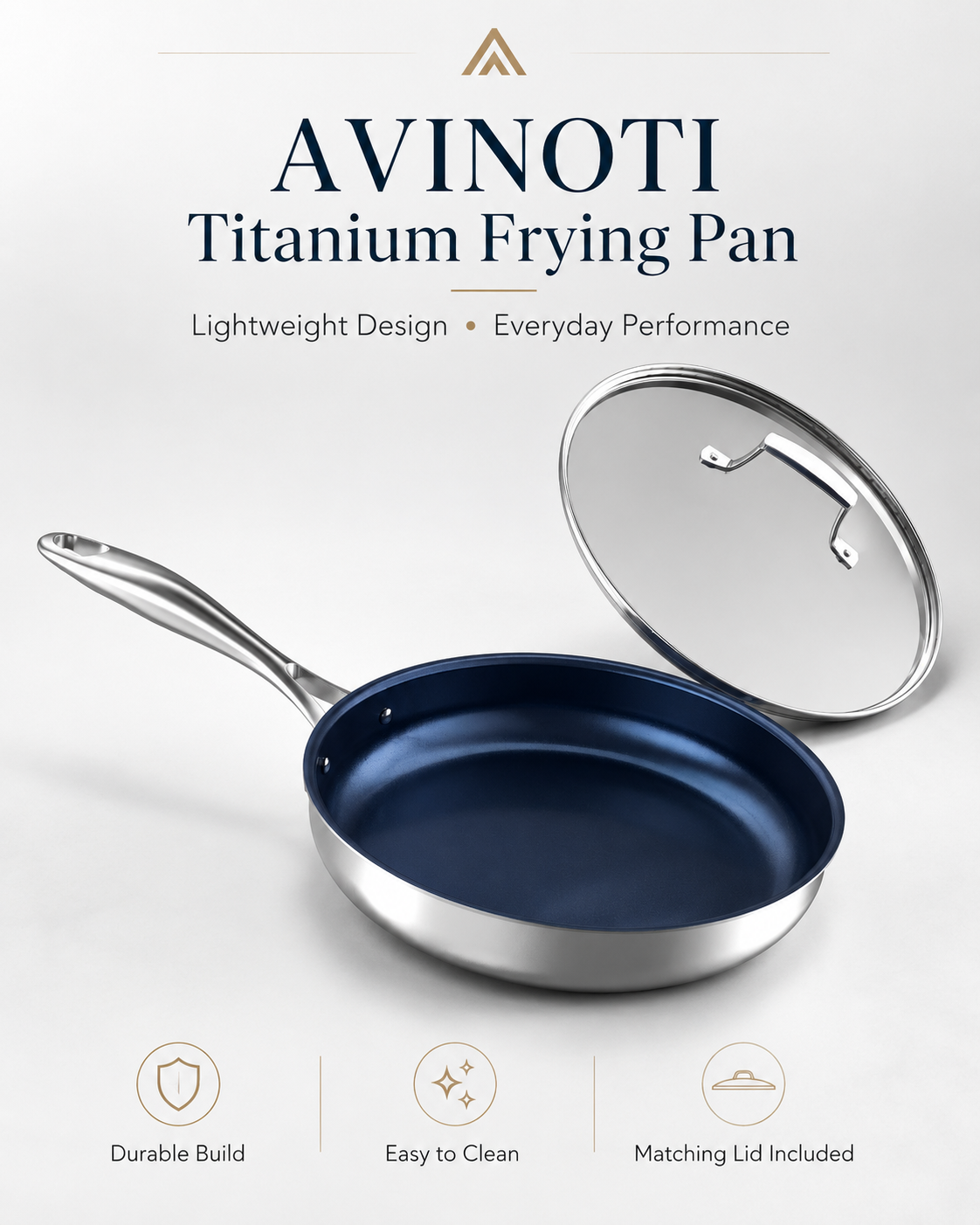 A frying-pan format is useful for checking handle comfort, usable surface area and everyday lifting weight.
Titanium vs stainless steel: the practical comparison
| Buying question | Titanium-labelled cookware | Stainless-steel cookware |
|---|---|---|
| Construction | Confirm whether titanium is the body, a layer or part of the surface system. | Confirm whether it is a single layer or a multi-layer build with another core material. |
| Weight | Some titanium formats are selected for lower carrying weight, but verify the listed product weight. | Weight varies widely with thickness, size and layered construction. |
| Cooking surface | Follow the stated utensil, heat and cleaning guidance for the exact surface. | Food-release behavior depends on technique and whether the item has a separate coating. |
| Cooktop fit | Do not assume induction compatibility from the word titanium; check the base specification. | Do not assume every stainless item works on induction; check the manufacturer’s compatibility statement. |
| Care | Use the product-specific instructions, especially if a coating or reinforced surface is present. | Check dishwasher, abrasive-cleaner and high-heat guidance for the exact construction. |
| Best use | Consider when verified weight, portability or the particular surface suits your routine. | Consider when the stated build, familiar care routine and available sizes suit your kitchen. |
Start with the meal, not the material
A material comparison becomes easier after you choose the pan shape you actually need. A stock pot, skillet and wok solve different problems, even when their material descriptions sound similar.
For soups, pasta and batch cooking
A stock pot should be judged by capacity, lid fit, handle placement and how comfortable it is to move when filled. The Avinoti Titanium Stock Pot with Lid provides a real format to evaluate: check the listed dimensions and included pieces against the quantities you usually cook.
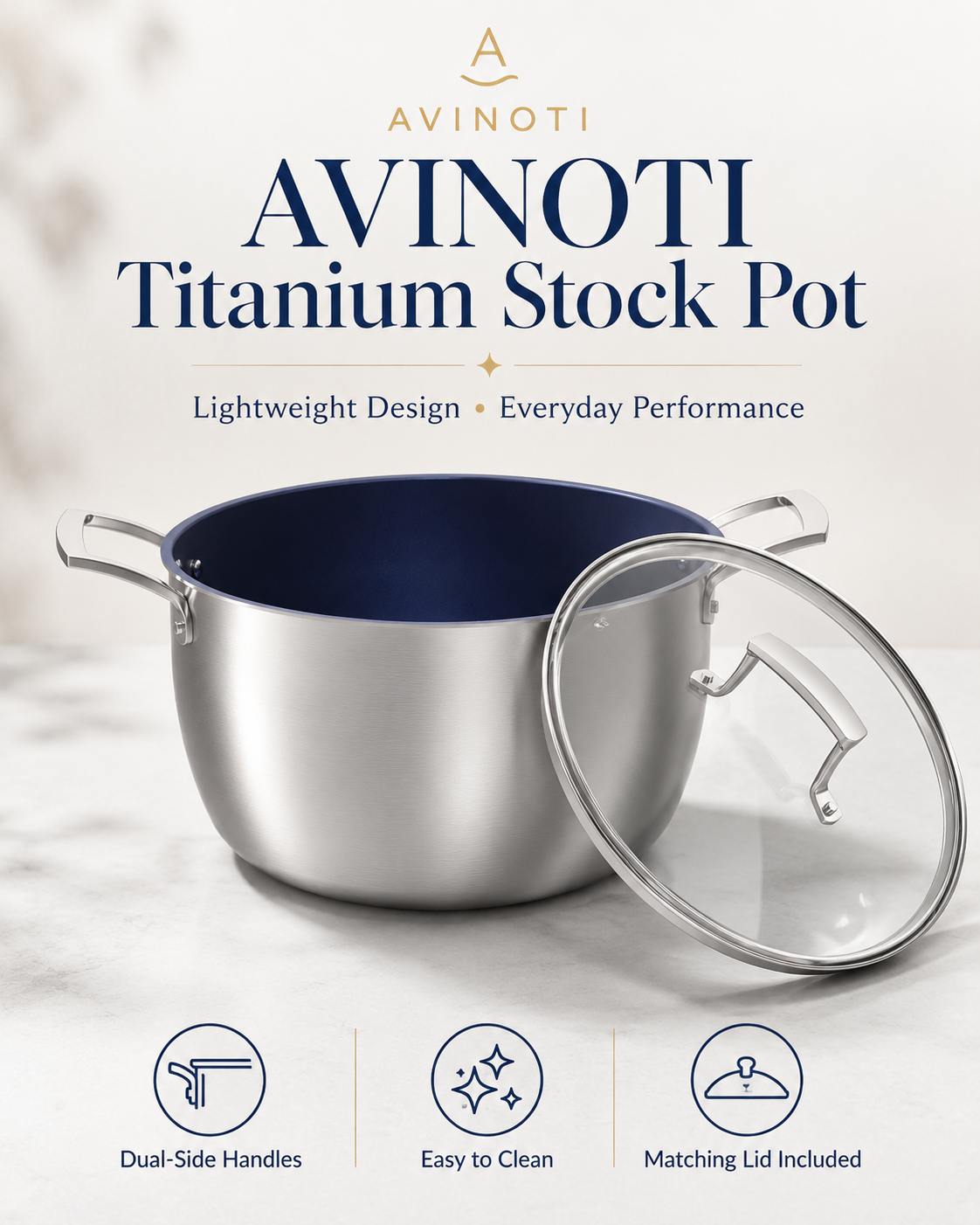 For a stock pot, capacity, lid fit and loaded handling are more useful comparison points than a material label alone.
For eggs, vegetables and quick stovetop meals
With a frying pan, focus on the usable cooking area, side-wall shape and handle. The Avinoti Titanium Frying Pan with Steel Handle is an example of why mixed construction matters: the product name itself identifies both a titanium pan and a steel handle, so each component should be evaluated for its own job.
For tossing, stir-frying and one-pan meals
A wok-style pan adds depth and curved sides. Check the base shape against your cooktop and confirm whether the included lid matches how you cook. The Avinoti Titanium Wok Pan with Lid is the relevant format here.
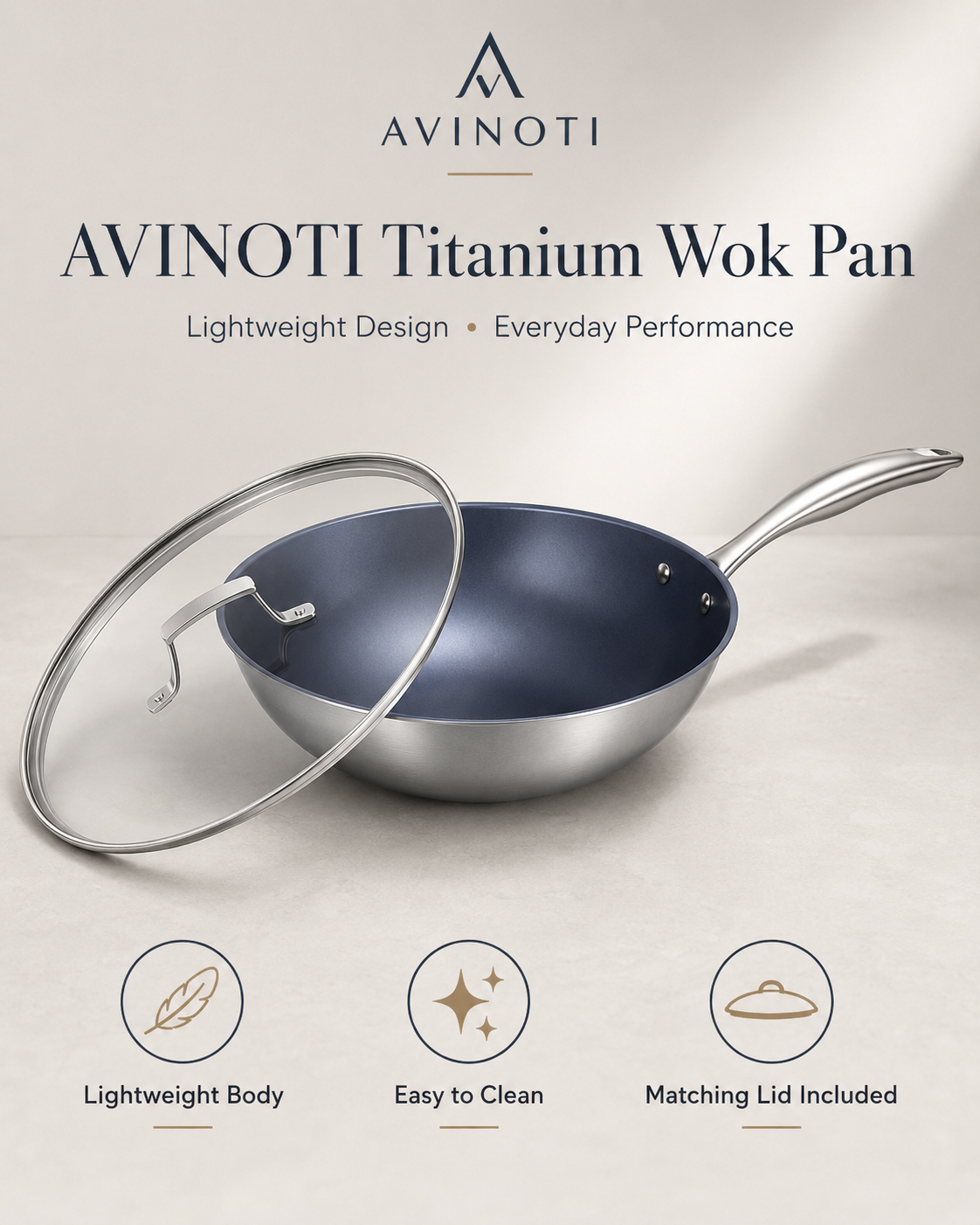 A wok-pan comparison should include base shape, depth, handle control and lid use.
A seven-point checklist before you buy
- Read the complete construction line. Identify the body, base, cooking surface, handle and lid materials separately.
- Match the size to your normal portions. A larger vessel is not automatically more useful if it is awkward to store or lift.
- Verify cooktop compatibility. Use the exact product specification, not an assumption based on the headline material.
- Check the permitted heat range. Follow the manufacturer’s guidance for preheating, oven use and empty-pan heating.
- Review utensil and cleaning instructions. This is especially important when the cooking surface is coated or reinforced.
- Inspect handle and lid details. Look for attachment method, grip shape, lid material and any stated temperature limits.
- Compare the complete set. Confirm what is included rather than relying on the lifestyle image.
Which material fits your routine?
Choose the titanium option when its verified construction, weight, surface and care instructions solve a specific problem for you. Choose stainless steel when the exact stainless construction, pan weight, cooking behavior and maintenance fit your habits better. If both products meet the same needs, compare warranty, replacement options, included pieces and total cost.
The key is to compare complete cookware systems, not two material buzzwords. A well-specified pan that fits your cooktop and cooking style is a better purchase than an impressive label with missing details.
Frequently asked questions
Is all titanium cookware uncoated?
No. “Titanium” can refer to different parts of a cookware construction. Confirm whether the item is bare metal, layered or uses a separate cooking surface.
Does titanium cookware always work on induction?
No material name alone proves induction compatibility. Check the exact base specification or the manufacturer’s cooktop list.
Is stainless steel always heavier?
Not always. Size, thickness, core layers, handles and lids all affect total weight. Compare the listed weight of the exact products.
What should I compare first?
Start with pan shape and size, then verify construction, cooktop compatibility, permitted heat, care instructions and included pieces.