
Titanium vs Stainless Steel Cups: Which Is Better for Coffee and Travel?
The titanium cup vs stainless steel decision is not as simple as picking the “better” metal. The right choice depends on what you carry, how you drink, how often you clean the lid, and how much you value low weight relative to price.
This guide compares the two materials without treating either one as a universal winner. It also separates the metal itself from the details that often matter more in daily use: capacity, wall construction, lid design, grip, cleaning access, and the way a cup fits your routine.
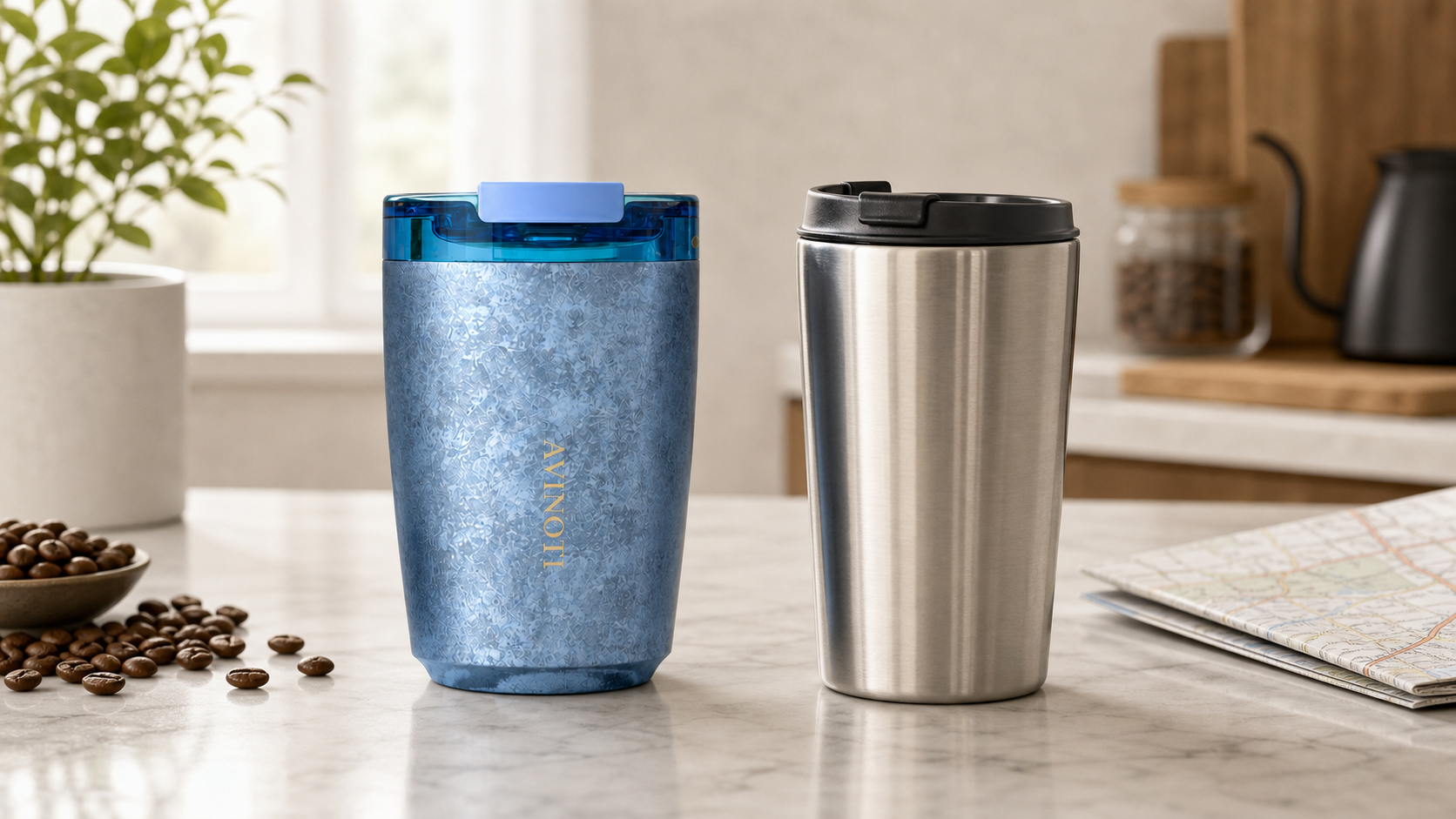
The short answer
Choose a titanium cup when low weight, corrosion resistance, and a premium travel-friendly material are high priorities. Choose stainless steel when you want broad availability, familiar construction, and usually a lower purchase price.
For coffee, neither label tells the whole story. A clean lid, the cup’s wall design, drinking temperature, opening shape, and retained odors can all change the experience. Compare complete products, not just “titanium” against “stainless steel.”
| Decision factor | Titanium cup | Stainless-steel cup |
|---|---|---|
| Carry weight | Often the stronger choice when the product is designed for low weight | Varies widely; many models are heavier at a similar size |
| Price | Usually positioned at a premium | Available across a wider price range |
| Corrosion resistance | A recognized strength of titanium | Generally strong, but performance depends on the steel grade and care |
| Heat at the rim | Depends on single- or double-wall construction | Also depends on single- or double-wall construction |
| Taste experience | Material, finish, cleanliness, lid, aroma, and temperature all matter | The same factors matter; old odors may remain in complex lids |
| Everyday selection | More specialized | Much broader |
| Best fit | Weight-conscious travel, compact carry, premium drinkware | Budget-conscious daily use, broad size and lid choices |
Why titanium can make sense for a cup
The Royal Society of Chemistry lists titanium at a density of 4.506 g/cm³ and describes it as strong, less dense than steel, and resistant to corrosion. Those properties explain why manufacturers can use titanium in products where low weight and durability are valuable. They do not mean every titanium cup is lighter than every steel cup; wall thickness, lid parts, insulation, and capacity still determine the weight of a finished product.
That distinction is important. A compact titanium cup with a simple lid may be easy to carry, while a large double-wall titanium tumbler with several seals can still feel substantial. Compare the listed weight of the complete cup whenever it is available.
Titanium is also a useful choice for people who want a cup that feels different from standard drinkware. Its surface, color treatment, and low-weight feel can be part of the appeal. That is a preference, not proof that it will improve the flavor of every drink.
Where stainless steel remains practical
Stainless-steel cups are easy to find in many capacities, wall designs, lid styles, and price ranges. That selection makes it easier to prioritize a specific feature, such as a narrow car-cup-holder base, a handle, a replaceable gasket, or a lid that can be taken apart without tools.
Steel can also be the practical choice when saving money matters more than reducing carry weight. A well-designed stainless cup with a simple, cleanable lid may serve an office or home routine better than a premium cup whose features do not match the user.
The comparison should therefore begin with a use case:
- For a short coffee at a desk, compact size and comfortable sipping may matter most.
- For commuting, lid security and bag placement matter more than the metal alone.
- For longer trips, capacity, weight, and access to cleaning become more important.
- For hot drinks, wall construction and the rim temperature deserve specific attention.
Does a titanium cup affect coffee taste?
Search results show that people ask this question because “taste” can refer to several different things. It may mean a chemical flavor, an old-coffee odor trapped in a seal, a different drinking temperature, or the way a lid changes aroma.
Titanium is valued for corrosion resistance, but that fact alone is not a guarantee that every cup will produce an identical sensory experience. Consider the complete drinking system:
- Cleanliness: Coffee oils can remain around threads, seals, and sliding closures.
- Lid design: A narrow opening can reduce aroma reaching the nose, which changes perceived flavor.
- Temperature: Very hot coffee can mute some flavors, while cooling exposes others.
- Surface condition: Residue, damage, or an unknown coating may matter more than the base-metal name.
- Drink history: A cup used for flavored beverages may retain odors if the lid cannot be fully cleaned.
If taste is your main concern, wash the cup and every removable lid part, rinse thoroughly, and compare the same coffee at a similar temperature. That is more useful than assuming either material must taste better.
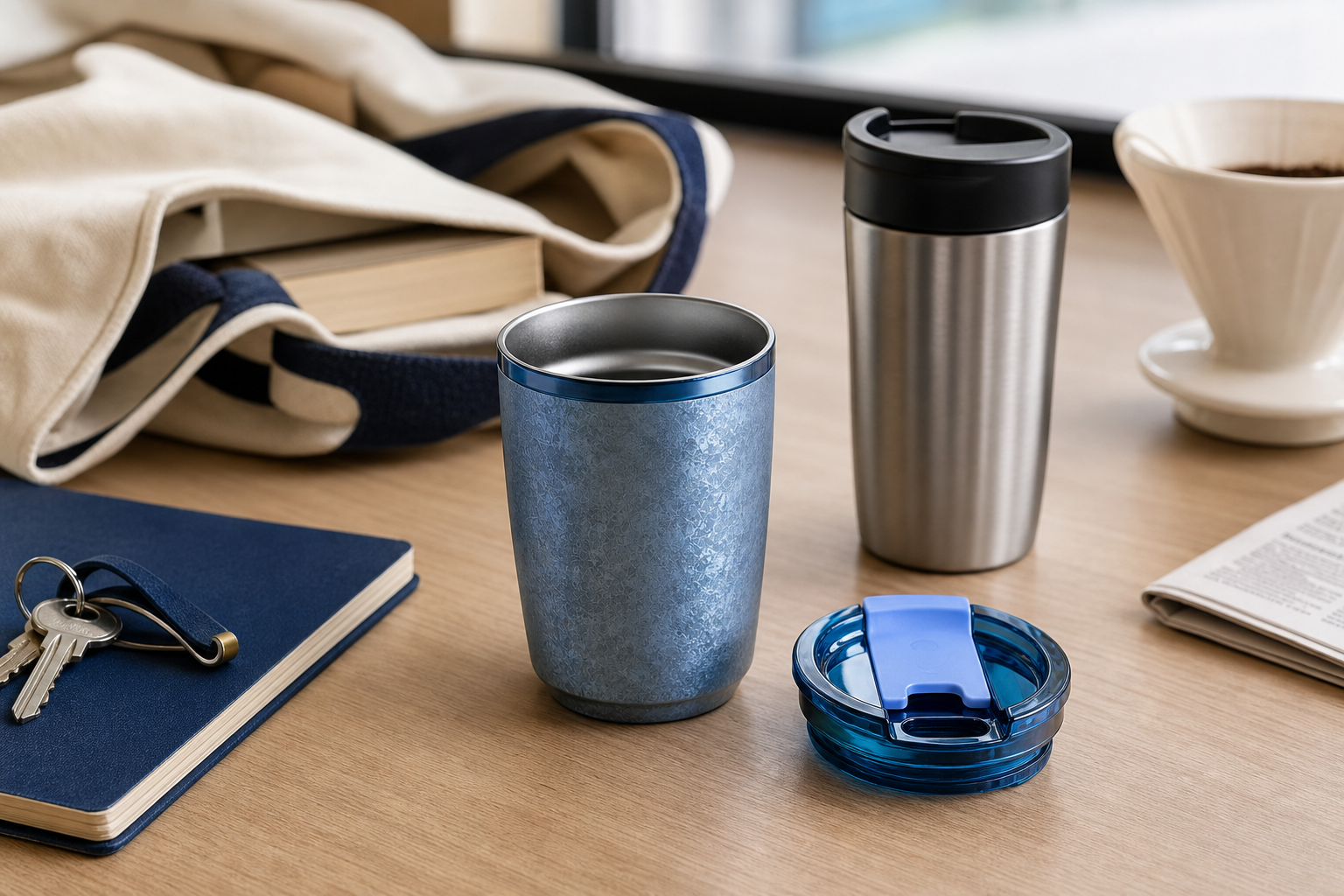
Single wall or double wall matters more than many buyers expect
A single-wall metal cup transfers heat readily. It may feel hot at the wall or rim, and it should not be assumed to insulate a drink. A double-wall design creates a separation between the inner and outer surfaces, but the actual result depends on how the product is built.
Before buying, check:
- Is the cup described as single wall, double wall, or vacuum insulated?
- Does the maker publish a complete weight, not only the metal type?
- Can the cup be heated directly? Never assume this is allowed, especially for double-wall or sealed products.
- Is the lid intended to prevent splashes, or is it explicitly described as leak-resistant?
- Are replacement seals available?
Do not infer these answers from “titanium” or “stainless steel.” They are product-level facts.
A practical size check: 230ml, 390ml, or larger?
Capacity changes how a cup fits a routine.
The 230ml pure titanium mini coffee cup is designed for coffee, tea, water, office use, and travel. Its compact capacity suits a smaller serving and people who prefer a cup that takes up less space.
The 390ml titanium travel cup provides more room and includes a Tritan inner lid according to the current product record. It is positioned for daily drinking, office use, travel, and gifting.
Neither capacity is automatically better:
- Choose about 230ml for compact coffee servings and minimal desk or bag space.
- Choose about 390ml when you want a longer drink without moving to an oversized tumbler.
- Choose a larger cup only after checking its full dimensions, weight, lid, and cup-holder fit.
You can compare the current options in the Avinoti titanium cup collection.
The buying checklist that prevents most disappointments
1. Verify the complete product weight
Titanium is less dense than steel, but a finished cup includes its walls, base, lid, seal, and optional insulation. Compare complete-product weights at a similar capacity when sellers publish them.
2. Inspect the lid, not just the body
Look for the number of removable parts, whether the drinking path is visible, and whether seals can be removed for cleaning. A complicated lid can become the weak point of an otherwise durable cup.
3. Match the wall design to the drink
For hot coffee, do not assume a bare metal wall will remain comfortable. Confirm the construction and follow the product’s temperature and heating instructions.
4. Check dimensions and real carry conditions
Measure the space where the cup will live: cup holder, bag pocket, desk shelf, or bicycle cage. A lightweight cup that does not fit is not a useful travel cup.
5. Treat “leakproof” as a claim that needs evidence
A press-on drinking lid, splash-resistant lid, and sealed travel lid are different. Use only the wording supported by the product specification, and test a new cup with water before carrying it near electronics.
6. Look for clear care instructions
The FDA’s general criteria for food-contact surfaces emphasize corrosion resistance, durability, cleanability, nonabsorbency, nontoxicity, and smooth construction. For a consumer cup, those principles translate into practical questions: Are seams smooth? Can all drink-contact areas be reached? Does the maker explain dishwasher use and cleaning?
Which material should you choose?
Titanium is likely the better fit if:
- Reducing carry weight is a real priority.
- You want a compact premium cup for office or travel.
- Corrosion resistance is important for frequent use.
- You have checked the capacity, lid, and wall construction and they match your routine.
- You are comfortable paying more for the material and design.
Stainless steel is likely the better fit if:
- You want more choices at different prices.
- A specific lid, handle, or capacity is more important than minimum weight.
- The cup will mostly stay at home, in a car, or at a desk.
- You prefer a familiar material and easy replacement options.
Keep comparing if:
- The product does not publish its capacity or construction.
- “Lightweight,” “insulated,” or “leakproof” appears without measurable support.
- The lid cannot be disassembled or inspected.
- The seller makes broad health or taste claims without reliable evidence.
Final verdict
Titanium wins the material comparison when low density and corrosion resistance directly support the way you travel. Stainless steel wins when selection, familiarity, and price are more important. For coffee, the best cup is the one whose capacity, wall design, lid, cleaning access, and carry fit have all been verified.
Start with your routine, then compare complete products. That produces a better decision than choosing a metal first and hoping the rest of the cup works.
Frequently asked questions
Is a titanium cup better than stainless steel?
It is better for some priorities, especially low-weight carry and a premium corrosion-resistant material. Stainless steel may be better for price, selection, and access to specific lid or handle designs.
Does a titanium cup affect taste?
The base material is only one part of perceived taste. Cleaning residue, lid design, drinking temperature, aroma, coatings, and previous beverages can all influence the experience. Compare clean cups with the same drink before drawing a conclusion.
Are titanium cups always lighter?
No. Titanium is less dense than steel, but finished weight depends on capacity, wall thickness, insulation, lid parts, and accessories. Compare the complete listed weights of similarly sized products.
Can a titanium cup go directly on a stove or flame?
Only if the specific product instructions explicitly allow it. Never heat a double-wall, vacuum-insulated, coated, sealed, or plastic-lidded cup based on the material name alone.
What should I check before carrying coffee in a bag?
Confirm the maker’s lid claim, inspect the seal, close it exactly as instructed, and test it with water away from electronics. “Splash-resistant” and “leakproof” are not interchangeable.