Titanium Tea Set Buying Guide: What to Check Before You Buy
A titanium tea set can be compact enough for travel, durable enough for regular use, and visually distinctive on a home tea table. Those advantages do not make every set interchangeable. Capacity, cup count, wall construction, handle design, nesting, and the carry case can matter more in daily use than the material name alone.
This guide explains how to compare those details without treating “titanium” as a shortcut for quality. It also covers the tradeoffs that product pages often leave out: small cups, hot rims, limited serving volume, and the difference between a portable tea set and a larger entertaining set.
Start with how you actually make tea
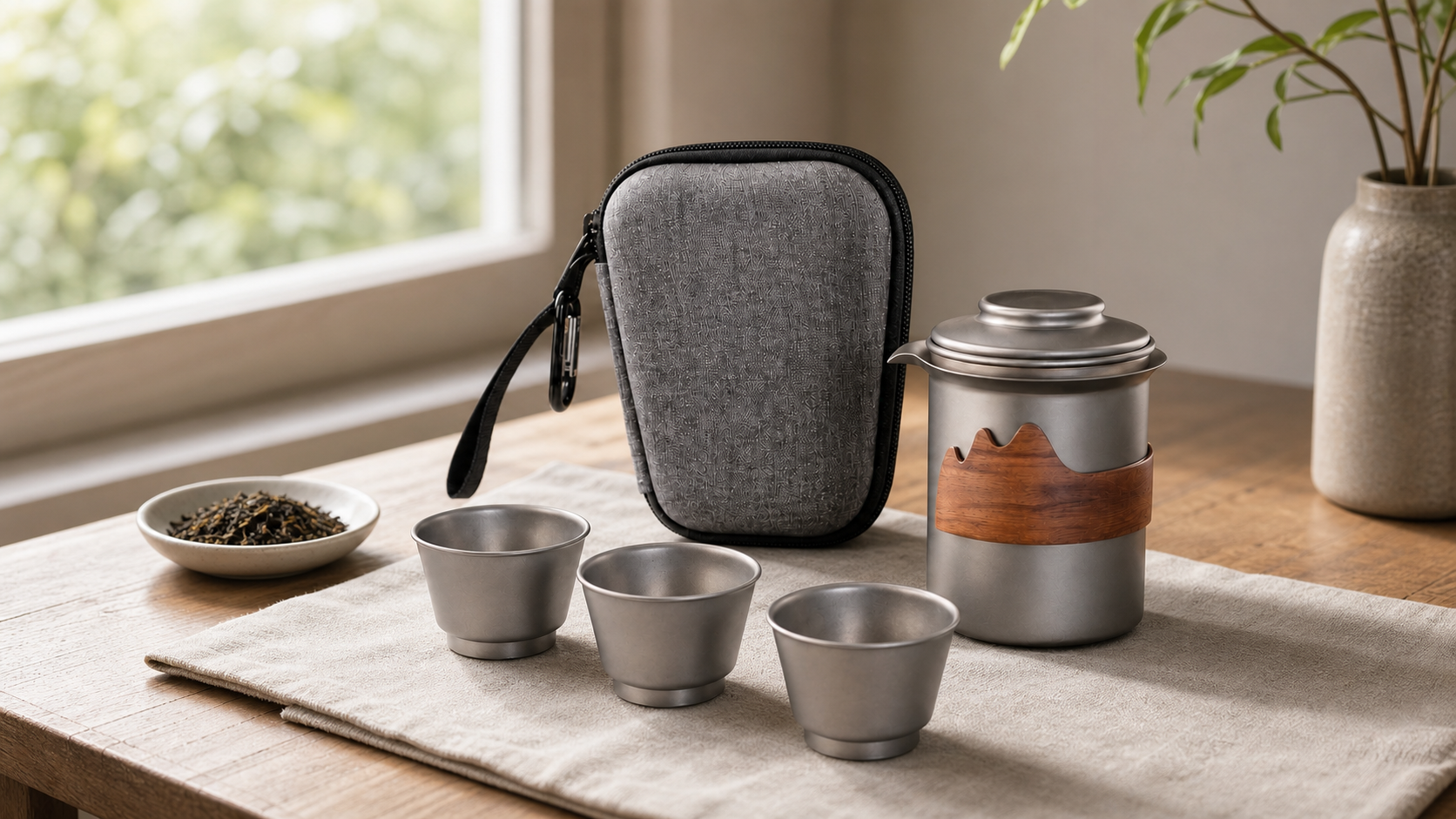
Before comparing specifications, decide where the set will be used most often.
- Travel or outdoor use: compact nesting, low packed volume, a protective case, and easy cleanup are usually the priorities.
- Office use: a controlled pour, a practical serving size, and storage that keeps wet pieces separated from electronics or paperwork matter.
- Home gongfu-style sessions: cup count, repeatable short infusions, comfortable handling, and the ability to decant cleanly become more important.
- Entertaining or gifting: presentation, the number of guests served, included accessories, and replacement-piece availability may outweigh minimum weight.
The best set for one use can be frustrating for another. A 260 ml pot with several small cups can work well for repeated infusions, but it is not a substitute for a large Western-style teapot. Likewise, a presentation set designed for a bar or living room may be less convenient to pack.
What does titanium change?
The U.S. Geological Survey describes titanium metal as having a high strength-to-weight ratio and strong corrosion resistance. Those material properties help explain why titanium appears in travel gear and consumer goods. They do not, by themselves, confirm the grade, thickness, finish, or construction of a particular tea set.
When a listing says “pure titanium,” check whether that claim applies to:
- the pot body;
- the lid and strainer;
- the cups;
- internal seams or fittings; and
- decorative bands, handles, or bases.
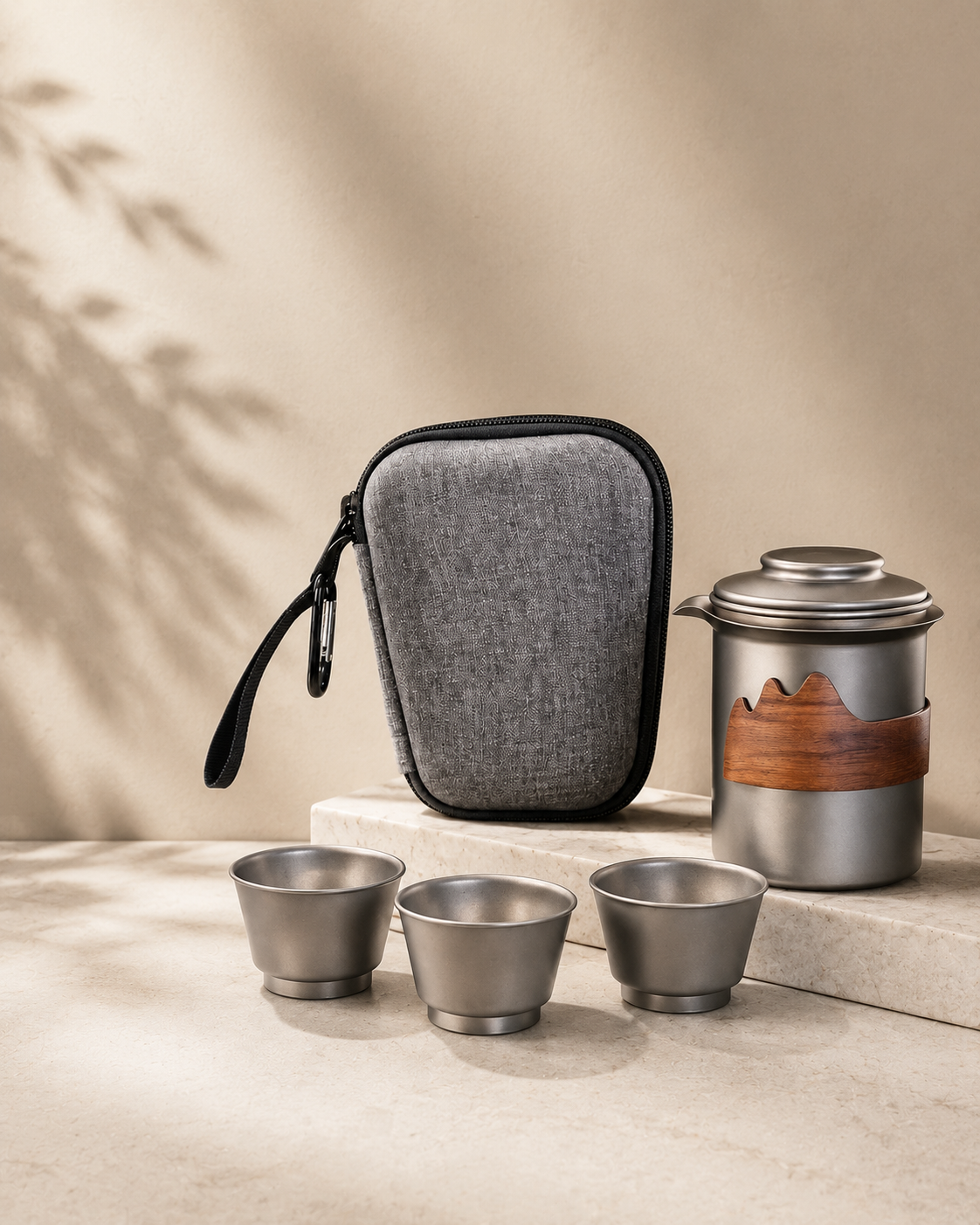
A set may combine titanium with wood, silicone, fabric, stainless hardware, or another material for handling and storage. That is not automatically a flaw, but it should be disclosed clearly enough for you to understand what touches the beverage and what needs special care.
Seven details to inspect before buying
1. Pot and cup capacity
Do not judge capacity from photos. Read the milliliter or fluid-ounce measurements for the pot and each cup.
A smaller pot is useful when you prefer several short infusions. It also means more frequent refilling. Small cups cool a modest serving quickly, but a narrow rim can feel hot if filled too high. If you normally make one large mug of tea, calculate how many pours the pot would require.
2. Single-wall or double-wall construction
Single-wall pieces are usually simple and compact, but the exterior can become hot. Double-wall cups may provide more separation from a hot drink, although they can add bulk and are not a guarantee that every surface stays cool.
The listing should identify which pieces are double-wall. Do not assume the entire set has the same construction because one cup or container is insulated.
3. Lid, strainer, and pouring control
Look at how the lid is retained while pouring. A loose lid can require a stabilizing finger, which is uncomfortable if the area is hot. If a strainer is included, consider whether the openings suit the tea you use. Fine broken leaves and large rolled oolong leaves create different filtration needs.
A well-shaped spout should start and stop predictably. Product photos can show the geometry, but owner feedback and a careful first test over a sink are more useful for judging drips.
4. Handles and hot-touch points
Titanium tea ware is still tea ware: it can become hot when filled with hot water. Identify where your fingers will contact the pot, lid, and cup rims. A wood accent or extended handle may improve handling, but only if it is firmly attached and positioned away from the hottest area.
During first use, preheat cautiously and test touch points before lifting a full vessel. Follow the seller’s temperature and use instructions.
5. Nesting and packed dimensions
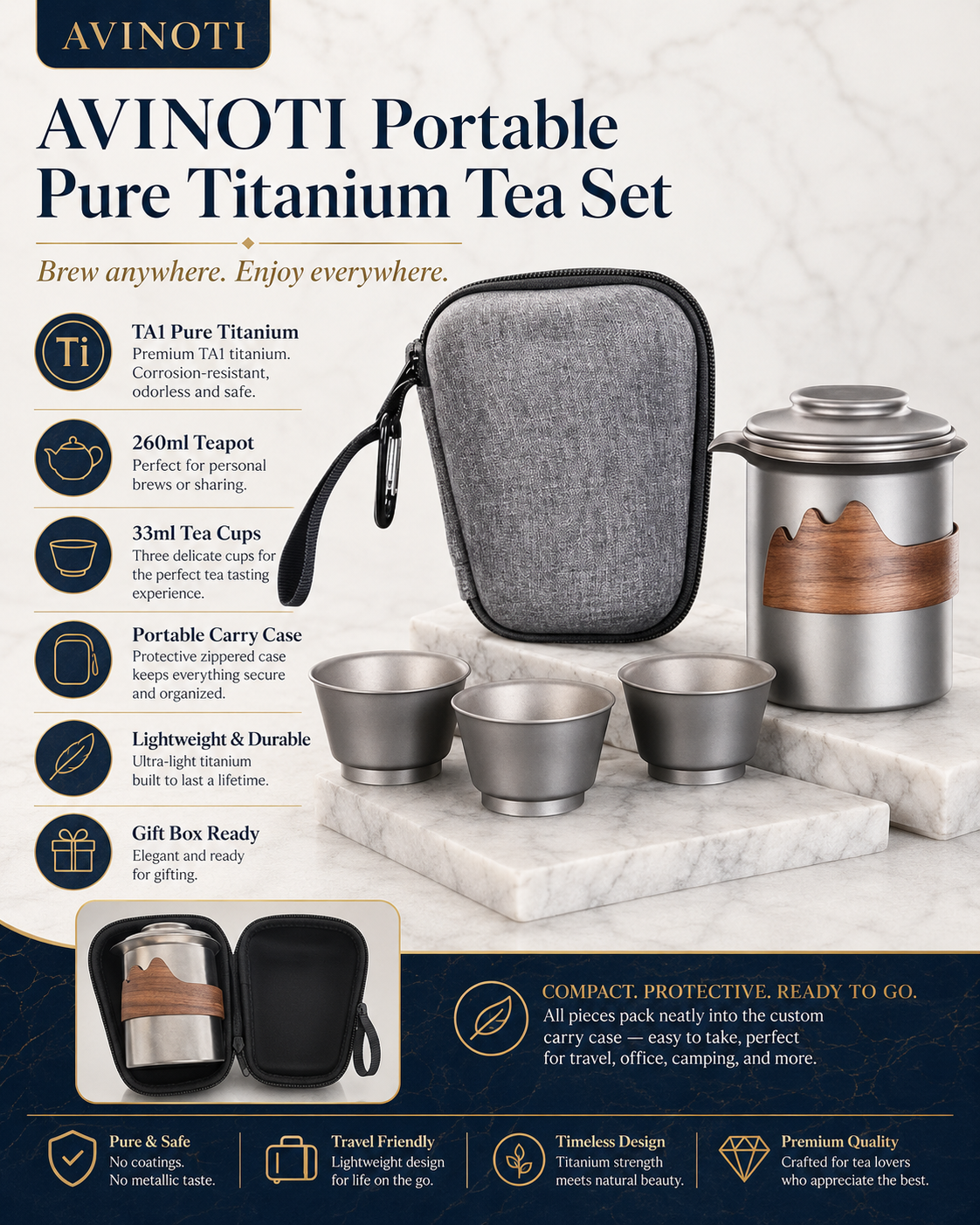
A portable set should explain how every piece fits into the carry case. Check both the assembled dimensions and the packed dimensions. A product can look compact in a cropped photo while still taking more bag space than expected.
Useful questions include:
- Do all cups nest without rubbing finished surfaces?
- Does the lid need to be inverted for packing?
- Is there a cloth or divider between pieces?
- Can the case close without forcing the zipper?
- Is the case intended for impact protection or mainly for organization?
6. Surface finish and cleaning access
Brushed, matte, and polished finishes show fingerprints and small marks differently. More important, inspect seams, lid channels, strainers, and decorative joints for areas that may trap tea residue.
Simple shapes are usually easier to rinse and dry. A set with wood accents may require keeping those parts out of prolonged soaking. Use the care instructions supplied for the specific item rather than assuming that every titanium product is dishwasher compatible.
7. Included pieces and replacement risk
Count every component in the listing, not in the lifestyle photo. Confirm whether the set includes a teapot, sharing pitcher, strainer, cups, tongs, tray, towel, or case.
For a gift, also ask what happens if one small cup or the lid is lost. A complete presentation is attractive, but an uncommon component can be difficult to replace individually.
Portable tea set or tea-and-bar gift set?
These two formats serve different situations.
| Decision point | Portable titanium tea set | Larger tea-and-bar set |
|---|---|---|
| Main purpose | Travel, office, compact tea sessions | Home display, entertaining, gifting |
| Packed size | Usually prioritized | Often secondary |
| Cup size | Frequently small | May offer more varied pieces |
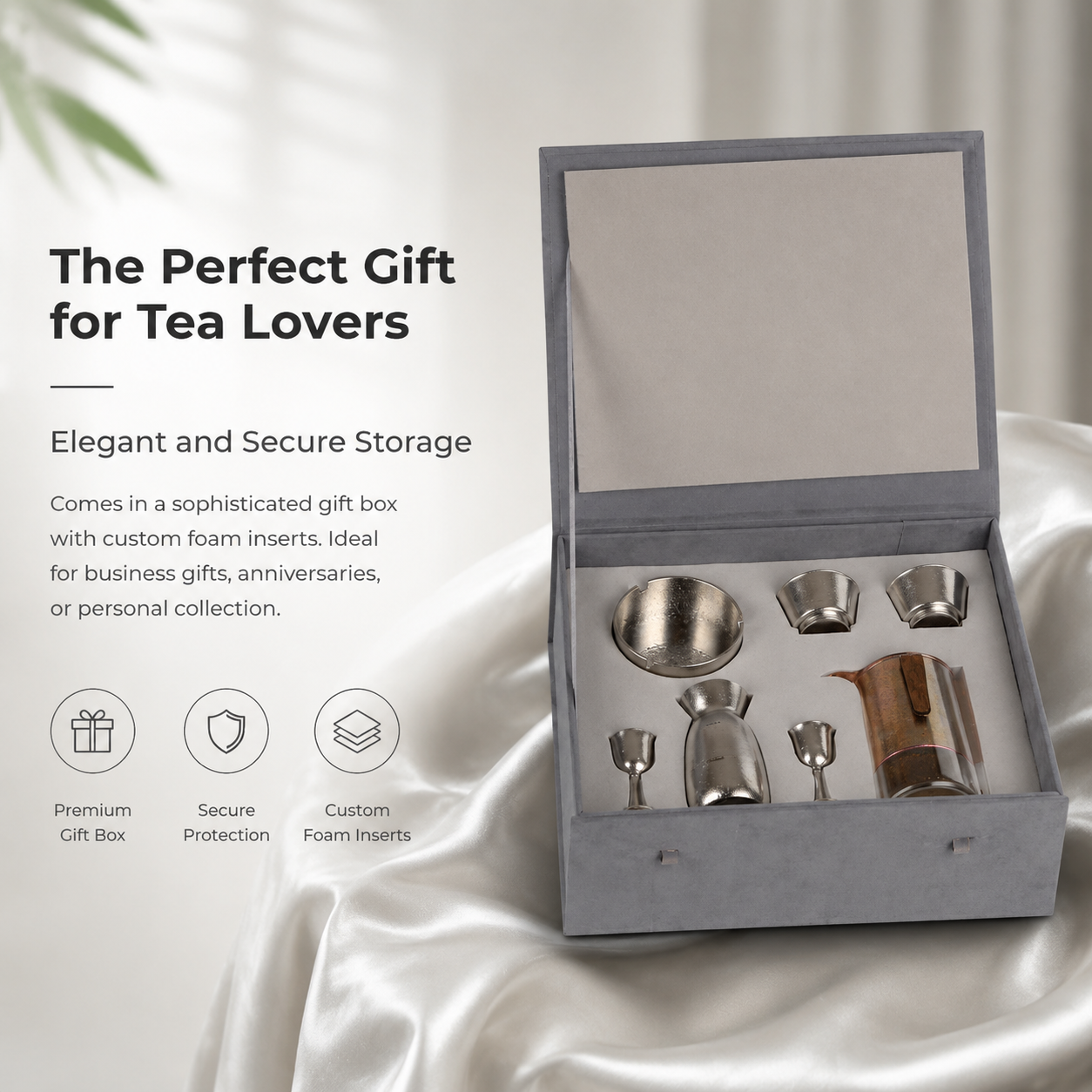
| Carry case | Common and useful | May use a presentation box instead |
| Setup time | Designed for quick organization | Can involve more accessories |
| Best question to ask | Does every piece nest securely? | Will the recipient use every included piece? |
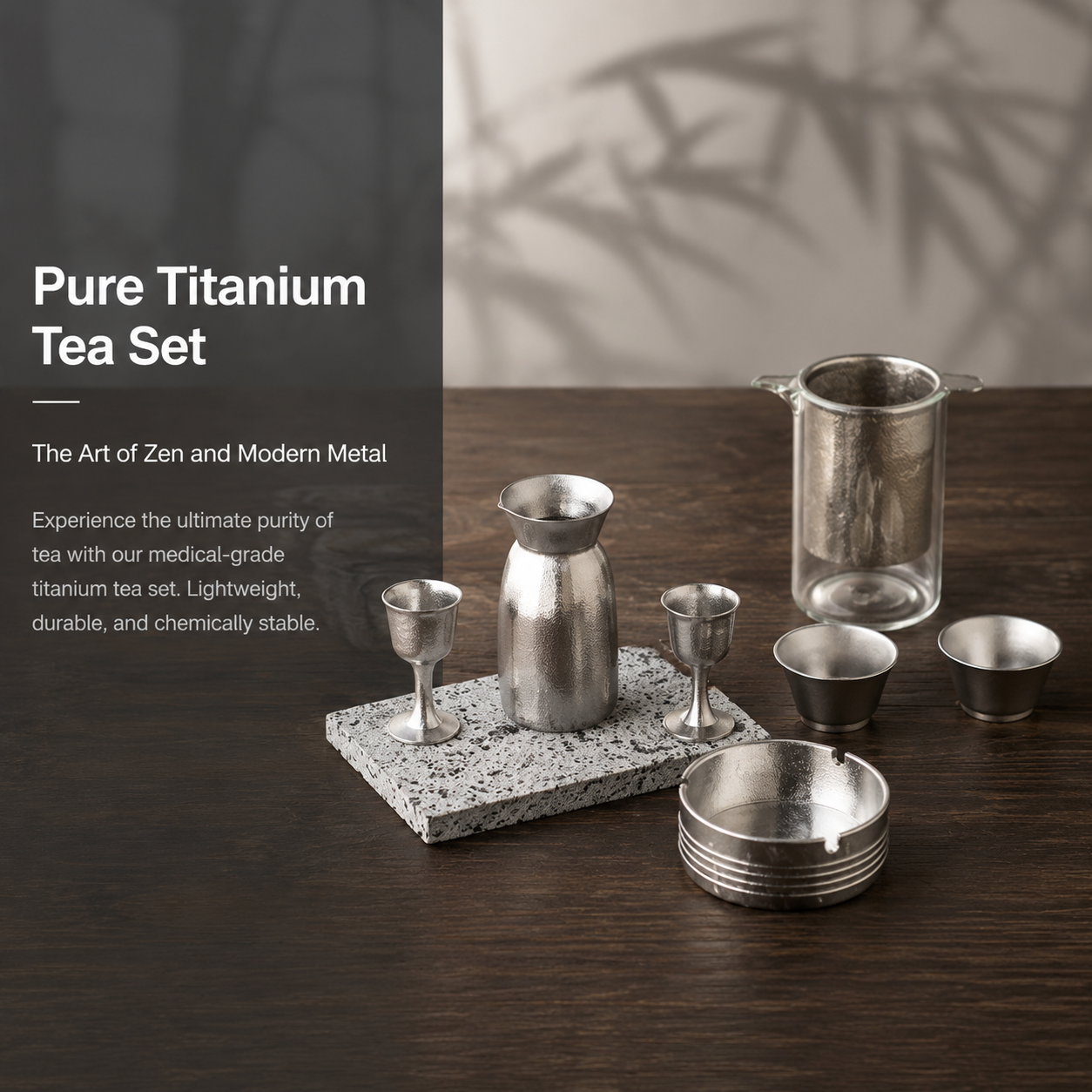
Avinoti currently offers a portable pure titanium tea set with a carry case and a separate titanium tea-and-bar presentation set. Compare their component lists and dimensions rather than choosing only by appearance.
A practical first-use check
When the set arrives:
- Compare every piece with the listing and packing list.
- Inspect rims, seams, handles, lid fit, and the interior surface in good light.
- Wash the pieces according to the seller’s instructions.
- Fill the pot with warm water first and check for leaks or unstable fittings.
- Progress to the intended water temperature while testing handles and touch points cautiously.
- Pour over a sink or tray to evaluate lid security and dripping.
- Let every piece dry completely before returning it to the case.
This simple check is more informative than making a full pot immediately. It also gives you a chance to document a missing or damaged component before the return window closes.
How to care for a titanium tea set
Care requirements depend on the full construction, not only the pot body. A conservative routine is:
- rinse soon after use so tea residue does not dry in seams;
- use a soft sponge or cloth and a cleaner permitted by the manufacturer;
- avoid abrasive pads unless the care instructions explicitly allow them;
- remove leaves from strainers and lid channels;
- dry the pot, cups, and case separately;
- do not close damp pieces inside a zip case; and
- inspect wood or bonded accents for their own cleaning restrictions.
Tea staining does not necessarily mean the base metal is damaged, but aggressive polishing can change a factory finish. Ask the seller before using metal polish, strong acids, or abrasive powders.
Who is a titanium tea set best for?
A compact titanium set may suit someone who:
- travels with a dedicated tea kit;
- values lower packed weight;
- prefers small repeated infusions;
- wants corrosion-resistant drinkware; or
- appreciates a modern metal finish.
It may be a poor fit for someone who:
- wants large mugs or a high-volume family teapot;
- dislikes touching warm metal surfaces;
- prefers traditional clay or porcelain brewing behavior;
- expects every part to be dishwasher safe without checking; or
- wants inexpensive replacement cups available locally.
No material removes the need to compare the actual design.
Frequently asked questions
Is a titanium tea set lightweight?
Titanium is known for a high strength-to-weight ratio, but the finished set’s weight depends on thickness, double-wall construction, wood accents, case hardware, and the number of pieces. Use the listed packed weight when comparing travel sets.
Does titanium change the taste of tea?
Titanium is described by USGS as chemically inert, but taste perception can also be influenced by cleaning residue, water, temperature, tea storage, and other materials used in the product. Rinse a new set as directed and assess it with a familiar tea.
Are titanium cups too hot to hold?
They can be, especially if they are single-wall or filled close to the rim. Check wall construction, use the intended fill level, and test carefully during first use.
Can every titanium tea set go in a dishwasher?
Do not assume so. Wood accents, bonded parts, surface treatments, and the carry case may have different requirements. Follow the specific manufacturer’s instructions.
What is the most important travel feature?
Secure nesting is usually more useful than an extra accessory. A set that rattles, rubs, or cannot dry properly inside its case is less convenient on the road.
Final checklist
Before buying, confirm:
- pot and cup capacities;
- total packed weight and dimensions;
- cup count and included accessories;
- single-wall or double-wall construction;
- lid retention and handle design;
- exact materials used in all beverage-contact parts;
- cleaning limits for wood, coatings, and the case;
- how pieces nest and dry; and
- return, damage, and replacement policies.
A titanium tea set should be chosen as a complete system—not just as a metal. Matching the vessel size, heat handling, packing method, and care routine to your habits is the best way to select a set you will actually use.