
How to Clean Titanium Cookware Without Damaging the Surface
Titanium cookware care starts with one rule: identify the construction before choosing a cleaning method. “Titanium” may describe the vessel, a layer, or a reinforced cooking surface. The product page and care sheet for the exact pan take priority over any general advice.
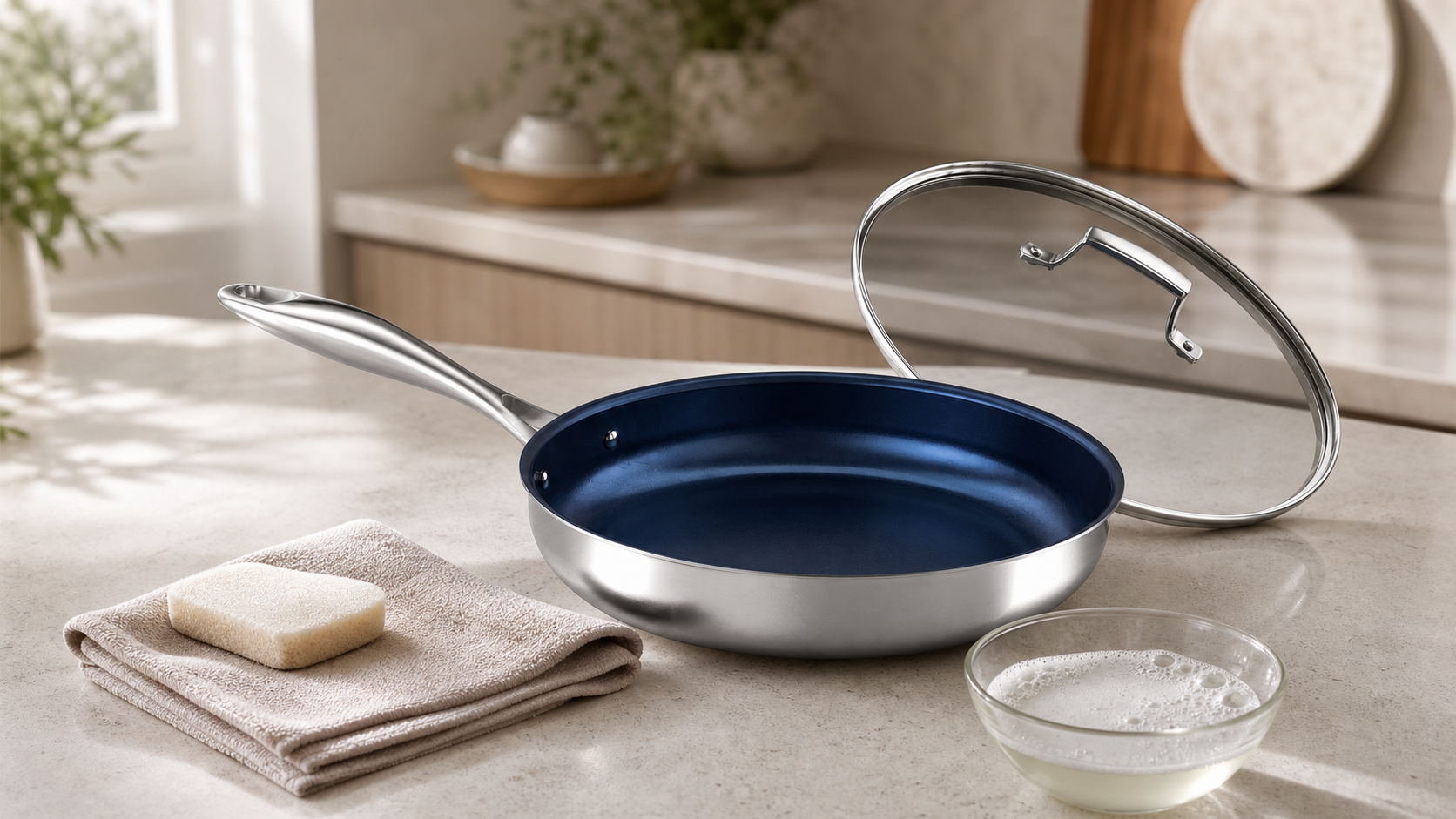
The safe routine after cooking
- Remove the cookware from heat and let it cool naturally. Do not move a very hot pan straight into cold water.
- Empty loose food and rinse with warm water.
- Use a soft sponge, mild dish soap and light pressure. Start with the least abrasive method.
- Rinse away all soap and inspect the surface in good light.
- Dry promptly with a soft towel before storage.
This routine avoids assumptions about coatings. If the maker permits a dishwasher, that is a product-specific option—not a rule for every titanium-labelled pan.
What to do with stuck-on food
Add warm water and allow the residue to soften. A short soak is usually easier on a surface than forceful scraping. Use only utensils and cleaners permitted by the maker. Avoid steel wool, sharp tools and aggressive powders unless the instructions explicitly allow them.
For cookware labelled nonstick or reinforced, do not infer that metal utensils or abrasive pads are safe. The construction can differ from one model to another. Avinoti's cookware comparison guide explains why the complete build matters more than the material word alone.
Heat, discoloration and warning signs
Discoloration is not always removable food residue. Stop and check the care sheet before trying acids, alkaline cleaners or polishing compounds. If the surface peels, flakes, warps, cracks or develops a sharp edge, stop using the item and contact the manufacturer or seller.
Never use cleaning as a reason to ignore damage. A pan that no longer sits flat, has a loose handle or has an altered cooking surface needs inspection before the next meal.
Storage that protects the surface
Store cookware fully dry. If pans are nested, place a clean soft separator between them so bases and handles do not scrape cooking surfaces. Keep lids where trapped moisture can escape, and do not stack heavy items on a thin rim.
FAQ
Can I put titanium cookware in the dishwasher?
Only when the exact manufacturer's instructions allow it. Handles, lids and surface systems may have different limits.
Can I use baking soda or vinegar?
Check the model-specific care sheet first. A cleaner that is suitable for one construction may alter another surface.
Why should a hot pan cool before washing?
A sudden temperature change can stress cookware and may contribute to warping. Cooling naturally is the conservative choice.
What is the best everyday tool?
A soft sponge is the safest starting point. Escalate only within the maker's written instructions.